
Is Your Masonry Repair Done Right? Here’s How to Tell

Masonry repair plays a critical role in maintaining the structural integrity, safety, and appearance of your property. Whether it’s brickwork, stone, or mortar joints, a properly executed repair can last for decades, while poor workmanship can lead to costly damage in just a few years.
So how can you tell if your masonry repair was done right? Read on to find out.
TL;DR: A high-quality masonry repair should have seamless material matching, clean and uniform joints, strong structural bonding, and no visible cracks or gaps. If the work looks consistent, well-aligned, and properly sealed, it’s likely built to last.
Why Quality Masonry Repair Matters

High-quality masonry repair directly impacts the durability and safety of your structure.
Prevents water intrusion that can lead to mold and interior damage
Maintains structural stability of walls, chimneys, and foundations
Preserves property value, especially in historic Massachusetts buildings
Reduces long-term repair costs by addressing issues correctly the first time
7 Signs Your Masonry Repair Was Done Right
Seamless Brick and Mortar Matching
One of the clearest signs of quality work is how well the new materials blend with the existing structure.
Mortar that complements the original in tone and composition
Especially important for historic restoration projects
If the repair stands out visually, it may indicate poor material selection. If you have a historic property in the greater Boston area, this is crucial! The last thing you want is to have your beautiful, old brick building with clunky and awkward-looking repairs.
Clean and Consistent Mortar Joints

Professional masonry work features uniform joints throughout.
Even spacing between bricks
Smooth, tooled finishes
Consistent joint depth and width
Uneven or sloppy joints are a red flag for rushed or inexperienced work.
Strong Bond and Structural Integrity
Quality repairs ensure all materials are securely bonded.
Bricks should feel solid and stable
No movement when pressure is applied
Mortar should not crumble or flake easily
Weak bonding can lead to premature failure and safety concerns.
Proper Alignment and Leveling
A well-done masonry repair maintains straight lines and proper alignment.
Horizontal and vertical lines are level
No bulging or uneven surfaces
Corners and edges are sharp and precise
Misalignment often indicates poor craftsmanship or lack of attention to detail.
No Visible Cracks or Gaps
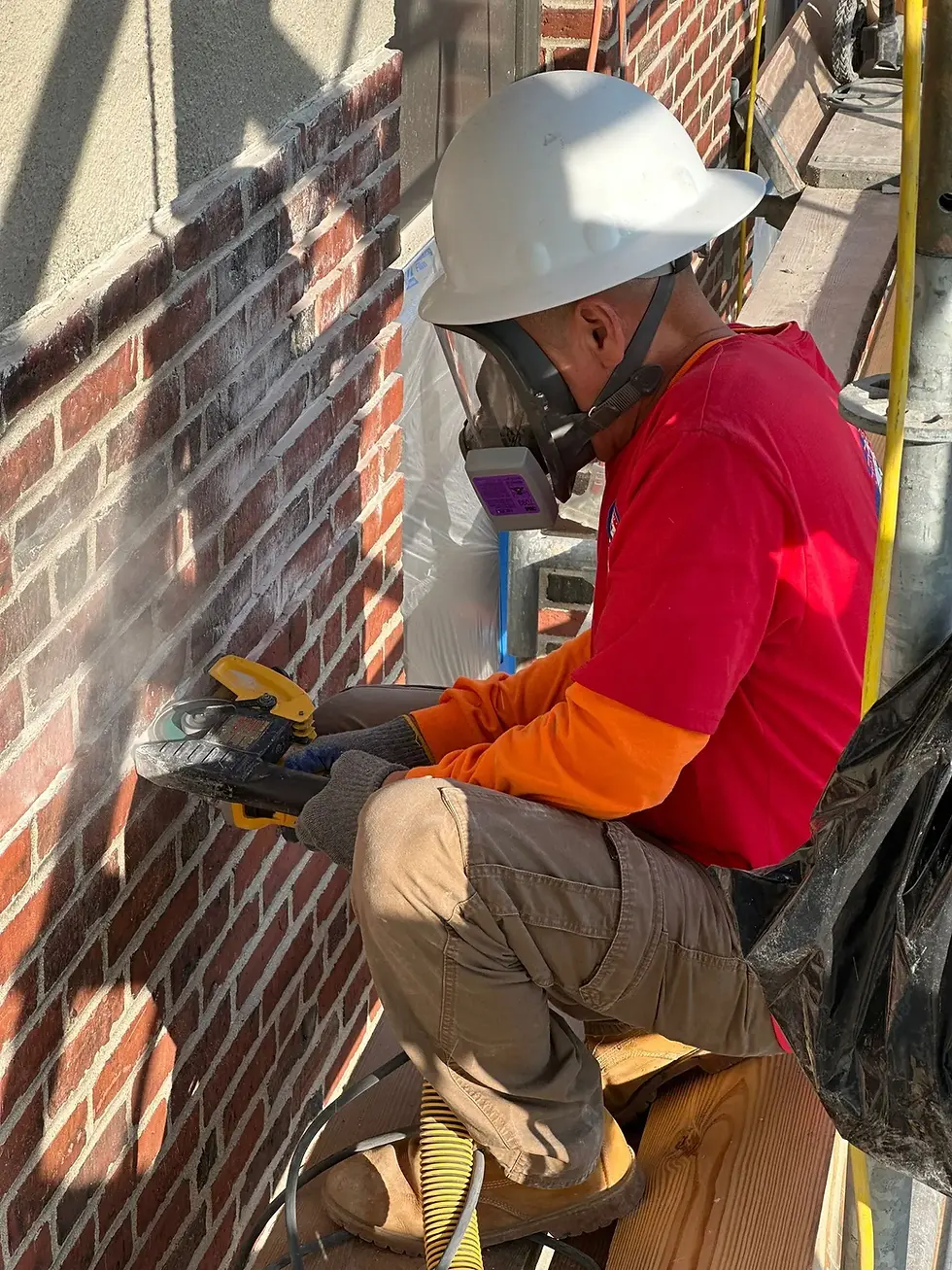
After a proper repair, surfaces should be tight and sealed.
No gaps between bricks and mortar
No early cracking or separation
Smooth transitions between old and new work
Cracks shortly after repair can signal improper curing or material issues.
Effective Sealing and Waterproofing
In Massachusetts’ climate, moisture protection is essential.
Proper sealing prevents water penetration
No signs of dampness or staining
Helps extend the lifespan of masonry
Without waterproofing, even good repairs can deteriorate quickly.
Clean Finish and Professional Appearance
Attention to detail separates professionals from amateurs.
No excess mortar smeared on brick faces
Worksite is clean and organized
Final result looks polished and cohesive
A clean finish reflects pride in workmanship and quality standards.
Warning Signs of Poor Masonry Repair
Knowing what not to see is just as important.
Watch out for these common issues:
Mismatched brick or mortar color
Crumbling or powdery mortar joints
Uneven lines or messy finishes
White residue (efflorescence) indicating moisture issues
Loose or shifting bricks
If you notice any of these signs, it may be time for a professional inspection.
DIY Inspection vs. Hiring a Professional
While property owners can spot many visible issues, some problems require expert evaluation.
What You Can Check Yourself
Visual consistency and alignment
Surface cracks or gaps
General appearance
When to Call a Professional
Structural concerns
Persistent moisture issues
Large-scale or historic restoration work
Professional masons have the tools and experience to diagnose deeper issues that may not be visible.
Questions to Ask Your Masonry Contractor

Before and after any masonry project, asking the right questions can ensure quality results:
What materials are you using, and why?
Will the repair match the existing structure?
How long should this repair last?
Do you specialize in restoration or similar projects?
What steps are taken to ensure durability and waterproofing?
Why Choose JMS Masonry & Restoration
JMS Masonry & Restoration has been serving Massachusetts for over a decade, delivering high-quality masonry solutions for both residential and commercial properties.
Expertise in brick repair, restoration, and masonry services
Skilled in historic restoration and modern construction
Serving Boston and surrounding counties including Essex, Middlesex, Norfolk, and Suffolk
Known for professional communication, reliability, and craftsmanship
From small repairs to large-scale restoration, JMS ensures every project meets the highest standards.
But don’t just take our word for it, here’s a glowing JMS Masonry review:
After researching eight masonry companies and receiving quotes from six, we selected John and his team at JMS for a major brick restoration project at my condo in Boston. This was a critical situation where the front façade was in danger of a total collapse and we needed a team of professionals that really knew what they were doing. The first thing that separated JMS from the competition was the thoroughness of their proposal. John laid out in step-by-step detail what the issues were and the work that would be required, as well as the time involved and the costs to fix the problems. JMS, by far, provided the most detailed proposal. His pricing against the competition was fair, as well. Not the absolute cheapest (we did not want the cheapest) but very fair. Second, JMS was the most communicative and “on it.” They turned the proposal around very quickly and John was extremely fast to return calls and texts thereafter. Really, A+ on communication and staying on top of it. John and his team are very personable, professional and really good guys. I trust them and feel great about leaving this kind of referral after my experience with them. End result was a completed brick restoration project to the front of the building that is structurally sound, looks great and came in on time and on budget. After that experience, me and the other condo owner contracted with JMS for additional work to the back of the building – foundation work – and had the same experience. In both cases John didn’t want to conclude the projects until/unless we were fully satisfied, going the extra mile that regard.
Protect Your Property with Quality Masonry Work
Masonry repair is an investment in your property’s future. Taking the time to assess the quality of the work can save you from costly repairs, structural issues, and long-term damage.
If you’re unsure about the condition of your masonry (or want expert results from the start) working with a trusted professional makes all the difference. Contact JMS Masonry & Restoration to get a free masonry estimate in the greater Boston area!
FAQs
How do I know if masonry repair was done correctly?
Look for uniform mortar joints, proper alignment, strong bonding, and no visible cracks or gaps.
How long should a masonry repair last?
High-quality masonry repairs can last 20-50 years (or more!) depending on materials and environmental conditions.
What are the most common masonry repair mistakes?
Poor mortar matching, weak bonding, improper sealing, and uneven joints are common issues.
Can bad masonry repair cause structural damage?
Yes, poor repairs can lead to water intrusion, weakening of structural elements, and costly long-term damage.
How often should masonry be inspected?
It’s recommended to inspect masonry annually and after severe weather conditions.


Comments